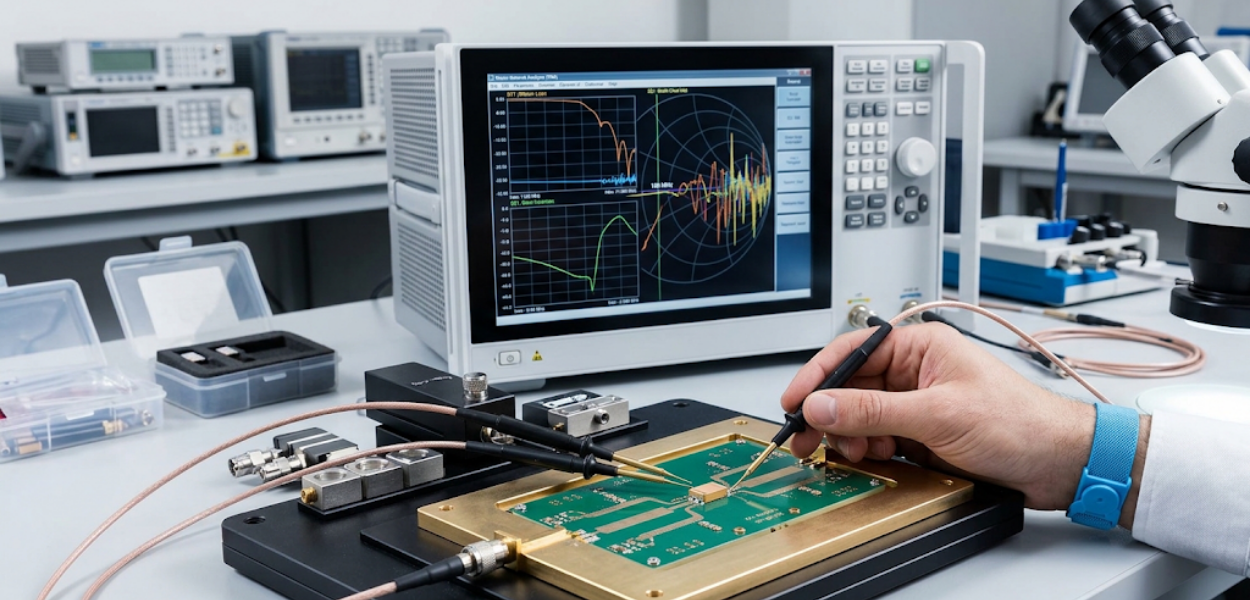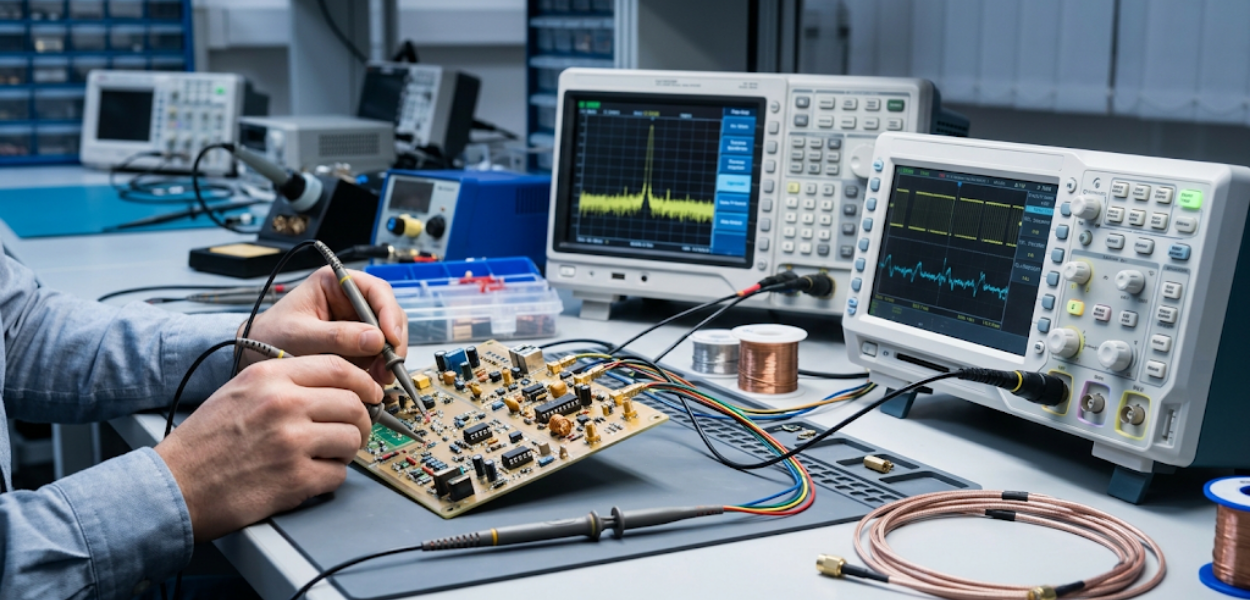
Organizations that design hardware depend on engineers who understand how voltage, current, and frequency behave in real components. Digital design skills alone don't cover this. Analog and RF circuits sit at the physical layer of every wireless product, sensor system, and communication device, and a team that lacks this competency produces designs that fail during prototype build, not just during simulation.
Why Has Training in Analog and RF Circuits Become Essential?
This training builds the technical ability to design, analyze, and troubleshoot circuits that operate on continuous signals and high-frequency transmission, and it closes skill gaps that slow down product development in the electronics, telecommunications, and defense sectors.
Universities graduate engineers with limited hands-on RF experience, and senior RF engineers are retiring faster than replacements can be developed, creating a real knowledge gap across many hardware teams. Product development cycles in sectors such as consumer electronics, automotive radar systems, and telecommunications infrastructure now require engineers capable of working with RF at earlier career stages than before.
How Is This Training Delivered Within Organizations?
The training combines theoretical instruction with lab-based circuit design, using simulation software and real test equipment, and it is delivered through structured modules that progress from component behavior to full circuit implementation. The process starts with a skills audit - identifying engineers who lack competency in specific areas, such as biasing networks or filter design, before selecting the training method.
Workshops are held over consecutive days for intensive, hands-on circuit-building sessions, online modules deliver theory asynchronously, and blended learning combines both. Instruction moves from single-component behavior to system-level design - from transistor stages and how gain and bandwidth change, to impedance matching between stages, to designing complete subsystems.
Assessment is practical, not theoretical - engineers submit working circuit designs, verified through simulation and, where possible, through actual measurement. A frequency response that looks correct on paper often fails once parasitic capacitance shows up on a real board.
What Are the Core Components of an Analog and RF Circuit Curriculum?
Operational Amplifiers: The foundation of signal-conditioning circuits - gain configuration, bandwidth limits, stability under feedback, and selecting amplifier specifications based on application requirements.
Biasing Networks: Setting the fixed operating point that transistors and amplifiers need before a varying signal is applied - poor biasing causes distortion, thermal drift, and inconsistent performance.
Transistor Stages: Amplifier configurations including common-emitter, common-base, and common-collector arrangements, and how each configuration affects input impedance, output impedance, and gain.
Impedance Matching: Preventing signal reflection at the junctions between circuit stages, antennas, and transmission lines - Smith chart analysis and matching-network topologies.
Noise Figure: A measure of how much a circuit degrades the signal-to-noise ratio - a core metric in receiver design, and identifying which stage dominates the overall system's noise performance.
Filter Design: Low-pass, high-pass, band-pass, and band-stop topologies, for isolating desired frequencies and rejecting interference.
What Benefits Does This Training Provide to Organizations?
Organizations report reducing design cycles by 15 to 25 percent, fewer prototype revisions, and a measurable improvement in first-pass design success rates. Engineers trained in impedance matching and noise figure calculation more consistently produce circuits that meet specifications on the first prototype, which reduces the number of board revisions, and each revision costs manufacturing time and component expense.
Team efficiency improves when engineers share a common technical vocabulary, and cross-functional projects move faster when RF concepts don't need repeated explanation between departments. Employee retention also improves when engineers receive structured skills development, because limited technical growth opportunities are one of the reasons engineers leave employers.
Who Actually Uses This Training?
Telecommunications teams apply it to base station and antenna system design, and automotive teams use it for the radar systems used in advanced driver-assistance systems. Aerospace and defense teams apply RF training to radar systems and satellite communications, where component tolerances are far tighter than in consumer applications.
Medical device teams use analog design skills for signal acquisition in diagnostic equipment, such as ECG and EEG systems, where noise figure directly affects diagnostic accuracy. Test and verification departments use the training differently from design teams - test engineers need to interpret circuit behavior to diagnose faults, even if they don't design the circuits themselves.
What Common Problems Weaken These Training Programs?
Generic curricula that treat all engineers identically regardless of prior experience, and disconnection from actual project work - engineers who finish training without applying the concepts to an actual product design within 30 days quickly forget procedural details, especially in computation-heavy topics like noise figure and impedance matching.
Poor lab access limits practical competency - simulation software teaches theoretical circuit behavior, but real circuits introduce parasitic effects, component tolerance variation, and thermal behavior that simulation alone doesn't capture. The absence of post-training measurement is the most common organizational failure - without a baseline measurement before training and follow-up afterward, organizations cannot determine whether the investment actually produced results.
Conclusion
Addressing these problems requires organizations to define specific design outcomes before selecting a training approach, rather than treating training as a generic professional development activity disconnected from production goals. Teams that combine theory with actual lab practice are the ones that can genuinely shorten design cycles and build sustainable internal capability.