
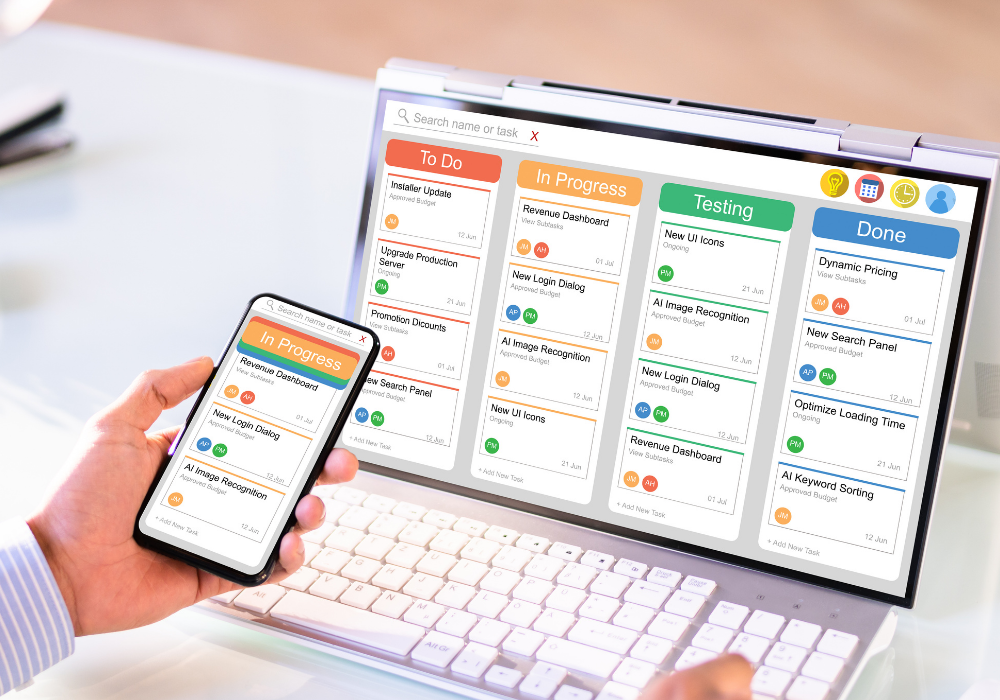
Every few years, a management philosophy arrives with enough momentum to feel less like a choice and more like an inevitability. Agile has been that philosophy for well over a decade now, and somewhere along the way, questioning it stopped feeling like a legitimate opinion and started feeling like a confession of incompetence. Say "we don't do daily standups" in the wrong room and watch the eyebrows go up.
That kind of orthodoxy rarely serves anyone well. Agile is neither the universal cure its evangelists promise nor the chaotic buzzword its critics dismiss it as. It is a set of trade-offs, genuinely powerful in some contexts and genuinely damaging in others, and the difference usually comes down to whether it was adopted deliberately or adopted because everyone else seemed to be doing it. At Arab British Fellowship Training Academy, we've watched organizations thrive under Agile and watched others quietly bleed money and morale under the exact same framework, implemented with the exact same certifications on the wall.
This piece sets aside the cheerleading and the backlash alike, and looks honestly at what Agile actually delivers, where it genuinely struggles, and how to tell, before you commit, which category your organization is likely to fall into.
What "Agile" Actually Means, Briefly
Agile is an iterative approach to project delivery built around short work cycles, frequent feedback, and the willingness to adjust a plan as new information emerges, rather than committing to a fixed, detailed plan upfront and following it rigidly to the end. It emerged largely from software development in the early 2000s and has since spread, with varying success, into marketing, product design, HR, and even construction and manufacturing.
That spread matters for this assessment. Many of Agile's advantages are strongest in the environment it was built for, and many of its disadvantages appear precisely when it's transplanted somewhere that environment doesn't exist.
The Real AdvantagesFaster Response to Change
Agile's signature strength is its tolerance for change mid-project. Because work is delivered in short iterations rather than one long build, a team can incorporate new information, a shifted market condition, new customer feedback, a regulatory update, without discarding months of work. In industries where requirements genuinely evolve quickly, this is not a nice-to-have. It's often the difference between shipping something relevant and shipping something obsolete on arrival.
Earlier Visibility Into Problems
Traditional, plan-heavy approaches often don't reveal a serious problem until late in the project, when a finished (or nearly finished) deliverable turns out to miss the mark. Agile's short cycles surface working increments early and often, which means a flawed assumption, a technical limitation, or a misunderstood requirement tends to show up in week two rather than month six, when it's dramatically cheaper to fix.
Higher Customer and Stakeholder Involvement
Because Agile builds in regular checkpoints, reviews, demos, sprint check-ins, stakeholders and customers see real progress continuously rather than waiting for a single reveal at the end. Done well, this builds trust and catches misalignment early. It also tends to produce a final product that's more likely to actually match what the customer needed, since they've had repeated chances to redirect it.
Improved Team Morale and Ownership
Agile teams are typically given more autonomy over how they solve a problem within a sprint, rather than being handed a rigid task list from above. For capable, self-motivated teams, this autonomy tends to increase engagement and a genuine sense of ownership over the outcome, rather than a feeling of simply executing someone else's plan.
Better Risk Management Through Incremental Delivery
Because Agile breaks large efforts into small, testable pieces, risk gets distributed rather than concentrated at a single, high-stakes launch. A failed experiment in sprint three costs a sprint. A failed experiment discovered at the end of an eighteen-month waterfall project can cost the entire investment.
The Real DisadvantagesScope and Budget Become Genuinely Harder to Predict
The same flexibility that lets Agile absorb change also makes it structurally difficult to answer a question executives frequently need answered: exactly what will this cost, and exactly when will it be done? Fixed-price contracts, board-level budget approvals, and long-term capital planning don't sit comfortably with a methodology whose core premise is that the plan will change. Organizations that need firm, upfront commitments often find themselves fighting the framework rather than benefiting from it.
It Demands a Level of Team Maturity Many Teams Don't Have
Agile depends heavily on self-organization, honest communication, and disciplined prioritization. A team that hasn't built genuine trust, or one with unclear roles and unresolved interpersonal friction, doesn't automatically become effective just because it starts holding daily standups. In practice, Agile often amplifies existing team dysfunction rather than fixing it, because there's no rigid top-down plan to paper over the gaps.
Documentation and Governance Often Suffer
Agile's emphasis on working products over comprehensive documentation is frequently misread as permission to document almost nothing. In regulated industries, or any environment requiring a clear audit trail, this creates real exposure. Compliance, healthcare, aerospace, and finance projects in particular often need a level of formal documentation that a loosely applied Agile approach simply doesn't produce by default.
Client and Stakeholder Fatigue
Constant iteration requires constant stakeholder engagement, sprint reviews, backlog grooming sessions, frequent check-ins. For stakeholders who expected to sign off on a plan once and revisit it at the end, this level of ongoing involvement can feel less like collaboration and more like an unending series of meetings, especially when they don't have the bandwidth Agile assumes they do.
Scope Creep Disguised as Flexibility
Agile's openness to changing requirements can, without deliberate discipline, become an excuse for scope to expand indefinitely. Every new stakeholder request gets framed as "just another item for the backlog," and without firm prioritization and a genuine willingness to say no, a project can drift for months without ever technically breaking any Agile rule.
Difficult to Scale Without Significant Structure
Agile principles were built with small, co-located teams in mind. Applying them across dozens of interdependent teams, multiple products, and competing priorities requires substantial additional structure, frameworks like SAFe exist specifically to address this, and that structure can end up looking suspiciously like the heavyweight governance Agile was originally designed to avoid.
So When Does Agile Actually Make Sense?
Agile tends to earn its advantages in environments with genuine uncertainty about requirements, a need for frequent stakeholder feedback, and a team with the maturity and autonomy to self-manage. Software development, digital product design, and marketing campaigns often fit this profile well.
It tends to struggle in environments with fixed regulatory requirements, firm contractual deliverables, highly interdependent physical construction sequencing, or inexperienced teams that need more structured guidance than pure Agile provides. In many of these cases, a hybrid approach, borrowing Agile's iterative feedback loops while retaining firmer governance and documentation, ends up outperforming a strict, by-the-book Agile rollout.
When the Trade-offs Tip Into Failure
Knowing Agile's disadvantages in the abstract is one thing. Recognizing them as they unfold inside your own team, before the damage compounds, is a different and much harder skill. A backlog that never shrinks, a stand-up that's become a status report nobody listens to, a "sprint" that quietly stretches to five weeks: these are early signals that Agile has stopped working as intended, long before a missed deadline makes the problem impossible to ignore.
We cover exactly how to spot those signals and pull a team back from the edge in our companion piece: When Agile Fails: Warning Signs and How Delivery Teams Recover.
Turning an Honest Assessment Into a Reliable Practice
Understanding Agile's advantages and disadvantages on paper is the easy part. Applying that understanding under real pressure, recognizing which trade-off you're actually facing in the moment, adjusting the framework rather than abandoning it, and catching a stalled delivery before it becomes a missed deadline, is where most teams struggle. This is precisely the gap that Arab British Fellowship Training Academy's Agile Project Management Course is built to close. Instead of teaching Agile as a fixed set of ceremonies to follow, the course works through the real failure points covered above: how to manage scope discipline without losing flexibility, how to keep documentation adequate without drowning the team in process, and how to catch a delivery risk early enough to actually do something about it.
Choosing the Right Path Forward
Whether Agile is the right fit for your team, your project, or your organization depends on factors no generic ranking can answer for you. Explore the full range of Project Management Courses at Arab British Fellowship Training Academy, built for professionals at every stage, from those adopting Agile for the first time to experienced practitioners troubleshooting a delivery approach that isn't working as promised. Browse the courses today and choose the path that fits your goals.


