
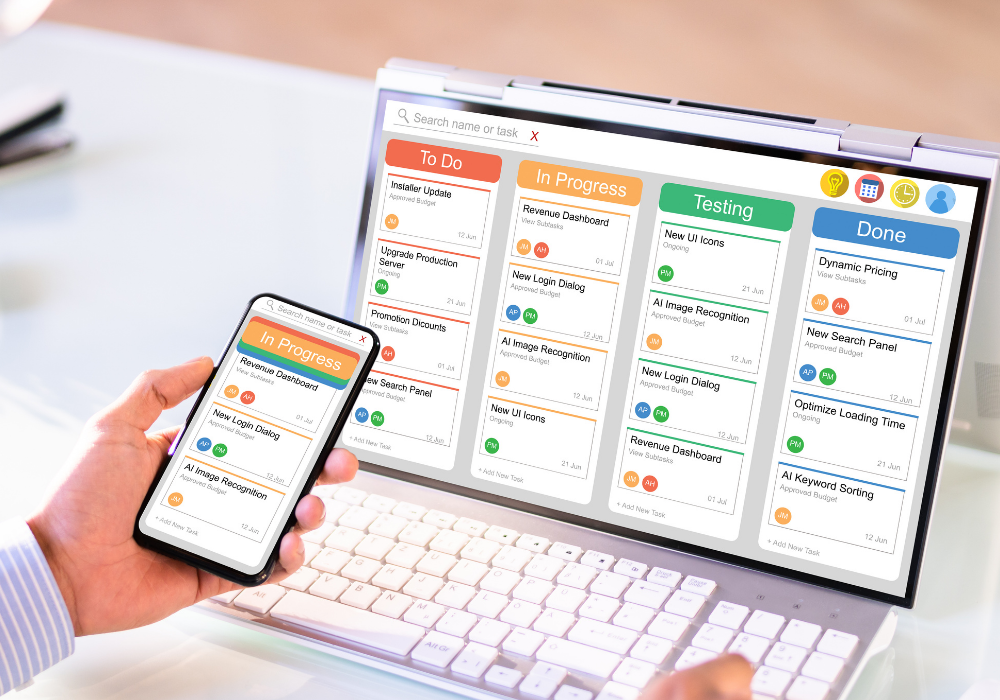
From time to time, management methodologies emerge that gain such widespread adoption that engaging with them starts to look like the only option available to organizations. Over more than a decade, Agile has been one of the most prominent of these methodologies. And as its use expanded across different sectors, it became easy for some of its practices to turn into fixed rules that aren't up for discussion, even when they don't suit the nature of a given project or team.
But the success of any methodology doesn't depend on how widespread it is, but on how well it fits the environment it's applied in. Agile is not a perfect solution for every project management problem, and it shouldn't be reduced to a set of meetings and management jargon. At its core, it's an approach built on flexibility, incremental development, and continuous engagement with change — qualities that can deliver significant results on some projects, while creating real challenges on others.
What Does Agile Project Management Actually Mean?
Agile relies on executing a project incrementally, rather than trying to define every detail upfront and carrying out the full plan along a fixed path. Work is broken down into short phases or cycles, so the team can review results repeatedly, benefit from feedback from clients and stakeholders, and adjust as needed. This approach began being widely used in software development in the early twenty-first century, then extended into other fields such as marketing, product design, and human resources. But Agile moving from one environment to another doesn't mean its benefits transfer to the same degree, because the methodology was originally designed to handle environments where requirements change constantly.
Key Advantages of Agile in Project Management
Fast response to change: In traditional projects, changing a major requirement can require reconsidering large parts of the plan. In Agile, work happens in short phases that allow priorities to be reviewed and the course to be adjusted continuously.
Catching problems before they escalate: The longer a problem takes to surface, the more it typically costs to fix. Agile creates opportunities to catch mistakes or flawed assumptions early, because work output is reviewed repeatedly.
Continuous involvement from clients and stakeholders: Instead of waiting for the final product, Agile allows progress to be tracked in stages, which narrows the gap between client expectations and what the team actually delivers.
Strengthening team autonomy: Agile teams rely more on their members' ability to make decisions about how work gets done, giving employees more room to apply their expertise instead of following detailed instructions.
Reducing project risk: Incremental execution allows ideas to be tested in stages rather than waiting until the end of the project, which limits the scale of potential loss.
Key Disadvantages of Agile and Their Related Challenges
Difficulty setting precise cost and deadlines: The flexibility that gives Agile one of its biggest advantages can make financial and time planning more complicated, which is a challenge for organizations that rely on pre-set budgets or fixed-price contracts.
The need for a mature team: Agile can't succeed just by renaming meetings — the methodology requires a team capable of communicating clearly, setting priorities, and taking ownership. If a team communicates poorly, adopting Agile won't automatically fix that; it may actually make it more visible.
Documentation and governance challenges: The focus on speed of delivery can reduce attention to documentation, which is a problem in sectors like healthcare, finance, and aviation that require formal records and clear procedures.
Stakeholder fatigue from continuous involvement: Agile requires frequent engagement from stakeholders, which can become a burden for those who don't have enough time for ongoing participation.
Scope creep without clear controls: Agile gives a project a strong capacity to absorb new requirements, but this flexibility needs clear boundaries, otherwise scope gradually expands without a clear point of completion.
Difficulty applying Agile to large projects: Agile works best when the team is small and closely connected, but the picture changes when a project is spread across a large number of interdependent teams and products, which requires additional structures such as SAFe.
When Is Agile Right for a Project?
Agile tends to be most suitable when project requirements aren't fully fixed, when client feedback matters during execution, and when the team has enough experience and autonomy to make decisions. But it may not be the best fit for projects that require strict adherence to fixed specifications, are governed by clearly defined contracts, or depend on a sequential execution process that's difficult to change. In these cases, combining Agile principles with elements of traditional management may be more appropriate.
How Do You Know Agile Implementation Is Running into Problems?
Warning signs can appear when the backlog keeps growing without ever shrinking, when the daily stand-up turns into little more than status reporting that doesn't influence the work, or when execution cycles keep getting longer without a clear explanation. These indicators don't necessarily mean Agile itself is the wrong fit, but they can point to a problem in how it's being applied or in the team's level of discipline.
From Understanding Agile to Applying It Effectively
It's easy to understand the basic principles of Agile, but the real challenge begins when a project manager has to apply them in an environment full of pressure, change, and competing priorities. A project manager doesn't just need to know how to run a Sprint — they also need to know when to stay flexible and when to set clear scope boundaries. The Agile Project Management course at the Arab British Fellowship Training Academy focuses on building a practical understanding of how to handle the challenges that arise during implementation.
How Do You Determine the Right Approach for Your Project?
No single methodology can be applied the same way to every project — the choice depends on the nature of the project, how clear the requirements are, the level of risk, the organizational environment, and the nature of the team. The Arab British Fellowship Training Academy offers a range of project management courses suited to professionals at different stages of their careers, whether they're encountering Agile for the first time or have prior experience and need to strengthen their ability to handle the challenges of project execution.