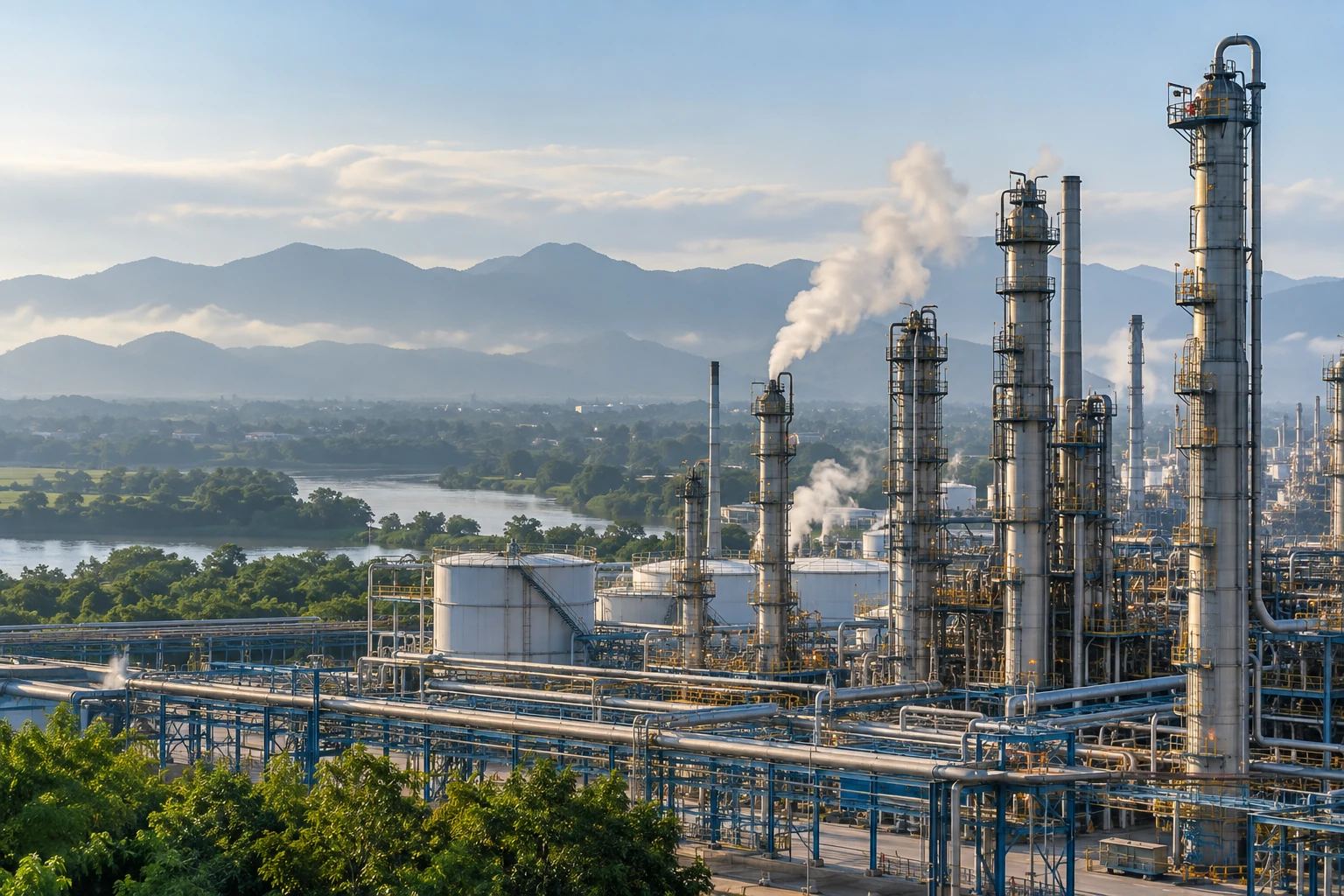
How hydrocarbons affect the environment: a simple guide
Hydrocarbons are organic compounds made primarily of hydrogen and carbon, forming the basis of crude oil, natural gas, gasoline, diesel, jet fuel, lubricants, and many petrochemical products. Their environmental impact begins the moment they are extracted, processed, transported, stored, used, or even leaked into ecosystems.
For organizations operating in energy-intensive industries, understanding the environmental impact of hydrocarbons is not just an environmental responsibility, but also an area of employee capability development. Engineers, supervisors, environmental teams, operations managers, and decision-makers need the technical knowledge to identify environmental risks, control emissions, and optimize operational performance.
Workplace training converts this knowledge into practical competence, because it links environmental science to operational controls, risk management, compliance, process performance, and organizational decision-making. This is why the topic forms a core part of structured professional development programs for oil and gas companies, refineries, petrochemical companies, transport operators, and industrial facilities.
How Do Hydrocarbons Affect the Environment?
The environmental impact of hydrocarbons includes air and water pollution, soil degradation, greenhouse gas emissions, and ecosystem disruption resulting from the extraction, processing, transport, storage, and combustion of oil and gas.
Hydrocarbon pollution occurs through several pathways. Combustion releases carbon dioxide, nitrogen oxides, sulfur compounds, and particulate matter; extraction activities create risks from spills, produced water, drilling waste, and methane emissions; and refining processes add further emissions through furnaces, combustion systems, flaring, process equipment, and waste streams.
Crude oil spills cause direct environmental contamination, and hydrocarbons can reach rivers, groundwater, coastal areas, and farmland; some compounds can persist in sediments and affect living organisms over long periods. The scale of impact depends on the type of hydrocarbon, the quantity spilled, environmental conditions, and the effectiveness of containment measures.
Air quality is another major concern, since refinery furnaces, boilers, compressors, storage tanks, and flares contribute to atmospheric emissions, and methane leaks from natural gas systems have a significant climate impact due to methane's potency as a greenhouse gas.
These environmental impacts create workplace training requirements. Employees need to understand emission sources, leak prevention, environmental monitoring, waste management, and emergency response, while managers need to link environmental performance to operational efficiency, legal compliance, and business continuity. That is why training begins with scientific understanding and moves toward practical workplace application.
How Does Hydrocarbon Environmental Knowledge Work in Corporate Training?
Corporate training converts hydrocarbon-related environmental knowledge into operational behavior through needs analysis, technical training, hands-on exercises, professional scenarios, assessment, and performance measurement linked to environmental controls and business objectives.
The first stage is a skills-gap analysis; HR and L&D managers identify the knowledge required for each role, since a process engineer at a refinery needs different competencies than a maintenance supervisor, an environmental officer, or a senior executive. The analysis compares current capabilities against operational requirements, and the areas covered include emissions, spill response, environmental risk assessment, waste handling, energy efficiency, and regulatory responsibilities.
The second stage defines learning objectives, and a course's objective should be linked to a measurable practical outcome, such as teaching employees to identify the main sources of hydrocarbon emissions, assess environmental risks, and select appropriate control measures. The third stage determines the training delivery method; in-person workshops support technical discussion and group problem-solving, e-learning modules support foundational knowledge acquisition, and blended training combines digital theory with hands-on application.
Case-based learning links theory to industrial incidents; for example, a spill scenario may require participants to identify the source, assess environmental exposure, prioritize containment, and determine reporting procedures. Assessment follows training; knowledge tests measure understanding, scenario evaluations measure decision-making skills, and hands-on exercises measure application ability. The final stage links training to operational performance, and training effectiveness shows when employees correctly apply environmental controls, reduce avoidable incidents, and improve monitoring accuracy or compliance levels.
What Should Oil and Gas Training Courses Include?
Training courses should combine hydrocarbon fundamentals, environmental risk management, emissions control, operational efficiency, regulatory awareness, incident response, and hands-on exercises that reflect actual working conditions.
Technical fundamentals cover hydrocarbon properties and their environmental impact pathways, and participants learn how crude oil, natural gas, and refined products behave during production, processing, transport, and combustion. Environmental risk management is another component, a structured process for identifying risks, assessing their consequences, and implementing appropriate control measures, and hydrocarbon process risks include spills, emissions, water contamination, waste, and accidental releases.
Emissions management requires specific technical knowledge, and employees study combustion emissions, fugitive emissions, flaring, and methane leaks, and learn how to use monitoring systems to understand environmental performance data. Energy efficiency is linked to both environmental and operational performance together, and refinery efficiency measures how effectively raw materials are converted into valuable products while controlling energy consumption, material loss, and emissions.
This is where environmental awareness transforms into broader operational efficiency, because employees who understand the relationship between energy consumption, process losses, and emissions have a stronger foundation for improving facility performance. Understanding refinery efficiency indicators, losses, and improvement opportunities becomes an important step as learners move from environmental awareness to operational process improvement.
Hands-on learning also requires emergency response training. Participants work through spill scenarios, emission detection exercises, and incident response simulations, and role-play exercises give supervisors the chance to practice communication, escalation, and coordination during environmental incidents. Assessment completes the learning system: written tests measure technical knowledge, case studies measure analytical thinking, simulations measure operational judgment, and workplace assessments measure employees' ability to convert knowledge into actual behavior.
How Does Hydrocarbon Pollution Affect Organizational Performance?
Hydrocarbon pollution affects organizations through environmental incidents, regulatory risks, production disruption, asset damage, remediation costs, reputational impacts, and inefficient resource use, making environmental efficiency part of operational performance and business continuity.
Environmental incidents create direct financial consequences; a major spill may require containment, cleanup, environmental assessment, and restoration, and production stoppages add another layer of cost. Weak environmental controls also expose weaknesses in operational systems; recurring leaks may indicate maintenance shortfalls, excessive gas flaring may indicate process inefficiency, and high energy consumption may indicate equipment or process performance issues.
Training helps employees understand these links; when a maintenance team recognizes the significance of fugitive emissions, it treats leaks as both an environmental and an operational issue at the same time, and when an operations team understands energy intensity, it links inefficient combustion to higher emissions and operating costs. Environmental performance also affects compliance, and organizations operating in regulated sectors need employees who understand applicable environmental requirements, monitoring responsibilities, and reporting procedures.
Leadership teams need a different level of knowledge; senior executives do not need the same technical depth as process engineers, but they need enough knowledge to interpret environmental performance indicators, allocate resources, assess risks, and define responsibilities. This produces a multi-level training structure: technical staff develop operational competence, supervisors develop control and coordination skills, managers develop performance-management capability, and executives develop strategic environmental decision-making skills, resulting in stronger alignment between workforce capability and organizational performance.
What Skills Do Employees Need to Manage Hydrocarbon Environmental Risks?
Employees need technical, analytical, operational, communication, and risk-management skills to control the environmental impacts of hydrocarbons, interpret performance data, respond to incidents, maintain equipment, follow procedures, and make decisions that protect environmental performance and operational continuity.
Technical knowledge provides the foundation, and employees need to understand hydrocarbon sources, emission pathways, waste streams, and the environmental elements affected. The risk-assessment process develops analytical capability, as employees identify risks, estimate consequences, and prioritize control measures — a skill particularly important in complex facilities with multiple simultaneous operations.
Monitoring and data-interpretation skills are also essential, because environmental performance indicators provide measurable evidence of performance levels, such as emission intensity, flaring volume, energy consumption, leak frequency, waste generation, and environmental non-compliance cases. Communication is a core operational skill, because environmental incidents require clear escalation of information between operators, supervisors, maintenance teams, environmental specialists, and senior management.
Problem-solving connects all these capabilities, as employees examine the source of an environmental issue, identify contributing factors, and decide on appropriate corrective actions. Leadership skills matter at the supervisory and management levels, as managers set expectations, review performance data, and ensure adequate resources are provided for corrective actions. Professional development, therefore, needs to combine technical competence with behavioral application, because knowledge without hands-on practice does not deliver reliable environmental performance.
How Do Organizations Measure Environmental Training Outcomes?
Organizations measure environmental training outcomes through knowledge scores, competency assessments, incident frequency, emissions performance, energy intensity, compliance outcomes, corrective-action closure, productivity indicators, and financial results linked to improved environmental and operational controls.
Measurement begins before training is delivered, as organizations set a baseline for the chosen performance indicator, since without a baseline, post-training performance offers no reliable comparison. Knowledge improvement is measured through pre- and post-course assessments, while competency requires hands-on measurement; a simulation exercise can assess an employee's ability to identify environmental risks, select the correct control measure, and follow escalation procedures.
Operational performance indicators provide stronger evidence of learning transfer to the workplace, including the frequency of hydrocarbon spills and environmental incidents, emission intensity, energy consumption, flaring rates, and maintenance-related leaks. Compliance performance adds another measurement layer, and organizations can track audit outcomes, environmental non-compliance cases, and corrective-action closure rates.
Financial measurement links learning to business value, as reduced product loss, lower energy consumption, fewer incidents, and shorter response times all produce measurable economic outcomes. Employee retention and internal capability-building also matter, since employees who understand environmental controls and operational standards contribute to stronger internal capability, and ongoing training supports succession planning.
Which Departments Benefit from Hydrocarbon Environmental Training?
Hydrocarbon environmental training supports operations, engineering, maintenance, environmental management, health and safety, procurement, leadership, and learning and development teams, because environmental performance depends on coordinating technical, human, equipment, data, and organizational controls.
Operations teams apply environmental controls during daily production, and their decisions affect energy consumption, emissions, waste, and process stability. Engineering teams use environmental knowledge when designing process improvements, upgrading equipment, and planning efficiency projects, and their work affects long-term environmental performance. Maintenance teams control many of the physical sources of hydrocarbon leaks, and equipment integrity, inspection quality, and maintenance speed affect emissions and leak risk.
Environmental teams manage monitoring, reporting, assessment, and compliance processes, and their effectiveness depends on the accuracy of the information operations teams provide. Health and safety teams coordinate risk management and emergency response, and environmental incidents often require the same disciplined approach to risk identification, communication, and escalation. Procurement teams also play an important role, since equipment specifications, contractor requirements, and supplier standards affect environmental performance across the supply chain.
Learning and development teams coordinate the capability-building framework, identifying skills gaps, choosing training methods, tracking program completion, and evaluating learning outcomes. Senior leaders use performance information to set priorities and allocate resources, making environmental competence a shared organizational capability rather than an isolated specialty confined to a single department.
What Are Common Problems in Environmental Training, and How Can Organizations Implement It Correctly?
Common problems include generic training content, weak workplace relevance, passive training methods, limited assessment, poor alignment with performance indicators, low management involvement, and failure to measure post-training behavior.
Generic training is one of the most prominent problems, because a standardized environmental course does not address the same risks present in a production facility, refinery, gas processing plant, or petrochemical facility. Another problem is excessive focus on theory, because workplace performance requires hands-on application, and case studies, simulations, and realistic scenarios link knowledge to operational decisions.
Training fails when its objectives are disconnected from key performance indicators, and one common misconception is treating attendance as proof of competency, because completing a course demonstrates participation but not an employee's ability to apply the required procedure under actual working conditions. Weak management involvement creates another gap, because managers influence whether new knowledge converts into operational practice.
Implementing environmental learning correctly starts with a workforce analysis and defining role-linked objectives, then delivering practical content, choosing appropriate training methods, assessing competency and workplace application, and monitoring performance indicators. Operators focus on process controls and incident response, engineers focus on improvement and technical risk management, supervisors focus on oversight and coordination, and leaders focus on governance and performance. The strongest model treats training as part of operational management, linking learning to risk controls, process performance, leadership development, and workforce planning.