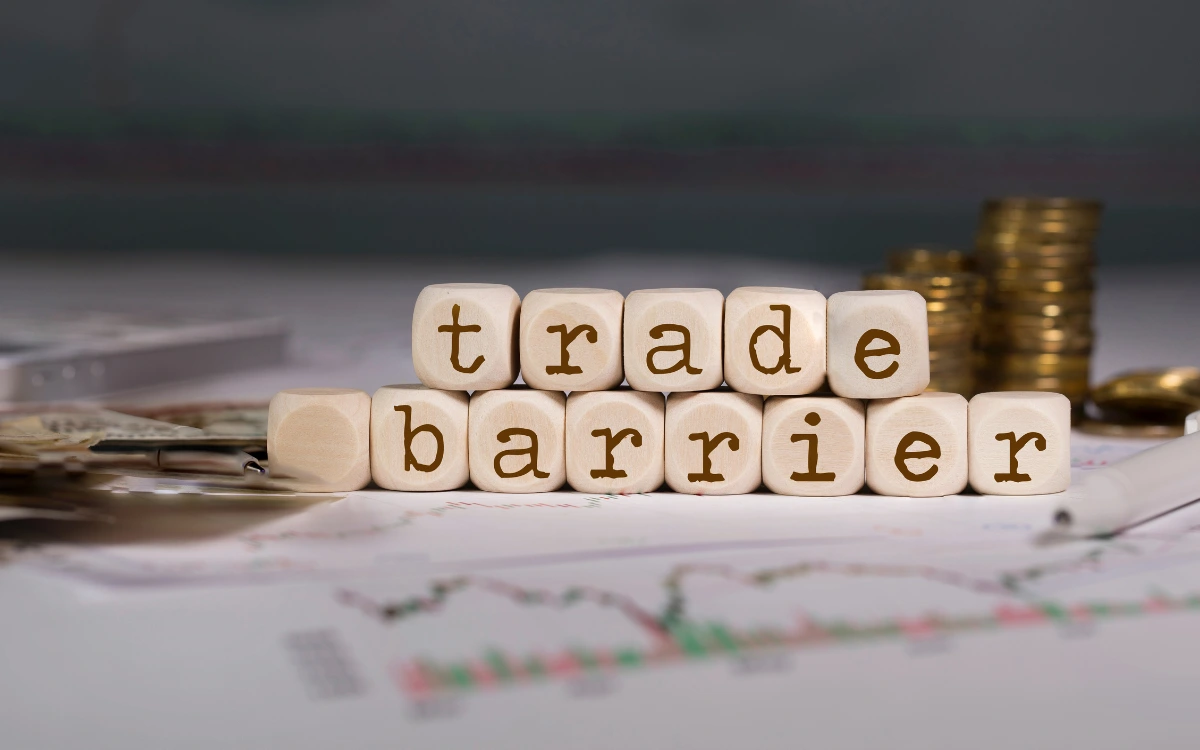
International Trade Finance Explained
International trade finance provides the financial and contractual framework that enables companies to buy and sell goods across borders while reducing commercial and payment risk. It combines banking instruments, internationally recognized trade rules, and structured documentation to support secure transactions between importers, exporters, financial institutions, and logistics providers. Organizations in sectors such as manufacturing, energy, pharmaceuticals, construction, retail, and food industries rely on it to improve cash flow, strengthen supplier relationships, and support expansion into international markets.
What is international trade finance?
It is a set of banking products, contractual trade rules, and payment mechanisms that enable organizations to carry out cross-border transactions securely, improve working capital, reduce financial risk, and maintain reliable relationships with suppliers and buyers. These systems protect all parties by defining payment obligations, shipping responsibilities, documentation requirements, and financial guarantees before goods move across borders.
Documentary credits, bank guarantees, and Incoterms rules are three core elements of this framework, and they work together to reduce uncertainty during international transactions and clearly define each party's responsibilities.
How do these instruments work?
- Documentary credit: a bank's undertaking to pay the transaction value to the exporter once all specified conditions and documents are met. It reduces non-payment risk for the exporter, while also protecting the buyer, since payment is only released once documents matching the terms are presented.
- Bank guarantees: work differently - they do not guarantee routine payment, but provide financial protection if a party fails to meet its contractual obligations. These include performance guarantees, advance payment guarantees, and bid bonds, and they are widely used in construction, infrastructure, and engineering projects.
- Incoterms rules: define responsibilities for transport, insurance, customs clearance, fees, and the point at which risk transfers during shipping, removing ambiguity by specifying each party's responsibilities at every stage of delivery.
Applying these instruments requires collaboration between finance departments, procurement specialists, logistics teams, legal advisors, compliance officers, and partner banks, all following documented procedures that ensure transactions comply with contractual terms and regulatory requirements.
What does international trade finance training cover?
Training builds practical knowledge of banking instruments, international trade documentation, Incoterms rules, regulatory compliance, and financial risk management, through learning methods designed for workplace application. It usually starts by explaining the fundamentals, then gradually moves to practical application, where participants learn how international trade contracts define obligations between parties.
Trade documents are a core part of the program, because the success of international transactions depends on document accuracy: commercial invoices, packing lists, certificates of origin, transport documents, inspection certificates, customs declarations, and insurance certificates. Even a small documentation error can delay shipments, cause payment disputes, or increase administrative costs.
Risk management is also a core focus: operational risk, documentary risk, exchange rate fluctuations, supplier risk, country risk, and compliance requirements. Modern corporate training combines in-person workshops, e-learning modules, blended programs, case studies, and simulations of complete trade transactions, from contract negotiation through to payment completion.
Why do organizations invest in developing their trade finance capabilities?
The aim is to reduce operational errors, strengthen financial governance, improve transaction efficiency, reduce payment disputes, and raise compliance levels. Finance departments benefit from more efficient payment processes, procurement specialists can negotiate contracts with clearer terms, and logistics teams coordinate shipping in line with defined Incoterms responsibilities. Standardizing procedures across departments reduces duplicated work and improves internal communication quality, and reduces shipment delays and contractual disputes.
Among the key performance indicators that measure the impact of development: documentation accuracy, transaction completion speed, compliance level, number of shipment delay cases, payment cycle duration, and contract execution rate.
Who uses international trade finance?
It supports many organizational functions: finance departments (payment arrangements and banking relationships), procurement (supplier negotiation), logistics (transport, customs documentation, and insurance), legal and compliance (reviewing contractual obligations), and senior management (evaluating supplier performance and expansion plans). Sectors such as automotive, oil and gas, pharmaceuticals, agriculture, electronics, consumer goods, heavy engineering, mining, and aviation rely on it heavily because their supply chains extend across multiple countries.
What challenges reduce the effectiveness of training in this field?
This happens when programs are generic and disconnected from actual workflow, lack measurable performance indicators, or are delivered without practical application through realistic scenarios. Generic programs lead to uneven competency levels across departments: finance may master banking procedures while procurement staff lack sufficient knowledge of contractual obligations. Case studies and simulation exercises raise employee readiness because they allow staff to handle realistic situations before managing actual operations.
How do organizations measure the impact of development?
By tracking operational performance, financial efficiency, compliance quality, and transaction accuracy, using defined indicators before and after training. Improvement shows through reduced transaction completion time, fewer document corrections, faster bank approvals, and reduced shipment delays. Successful organizations integrate trade finance capabilities within broader workforce development strategies that focus on practical learning, cross-department collaboration, and continuous improvement.